"Okay, so maybe G.E. still holds its own against the Cupertino-based computing giant — after all, it did earn a $3.5 billion tax credit in 2010 on over $5 billion profits — but Apple's tax accountants are clearly world-class. They managed to save the company as much as $2.4 billion in taxes last year, with the company paying just $3.3 billion on $34.2 billion in profits, according to a front-page story in today's New York Times. "
Apple’s Tax Guys Are Better Than Yours
See Image: Double Irish With a Dutch Sandwich’ New York Times
Sunday, April 29, 2012

Saturday, April 21, 2012
Saturday, April 7, 2012
What’s This? A Mac Virus? No, Actually It’s a Weakness in Java.
When a computer incident happens on Apple’s Mac OS X, it’s a headline-making event. When it happens on Windows, it’s just another day.

Continue Reading article on All Things D
That remains the reality, even after a bunch of media reports on how a vulnerability in Java has led to the creation of a Mac botnet about 600,000 strong.
Continue Reading article on All Things D
Friday, April 6, 2012
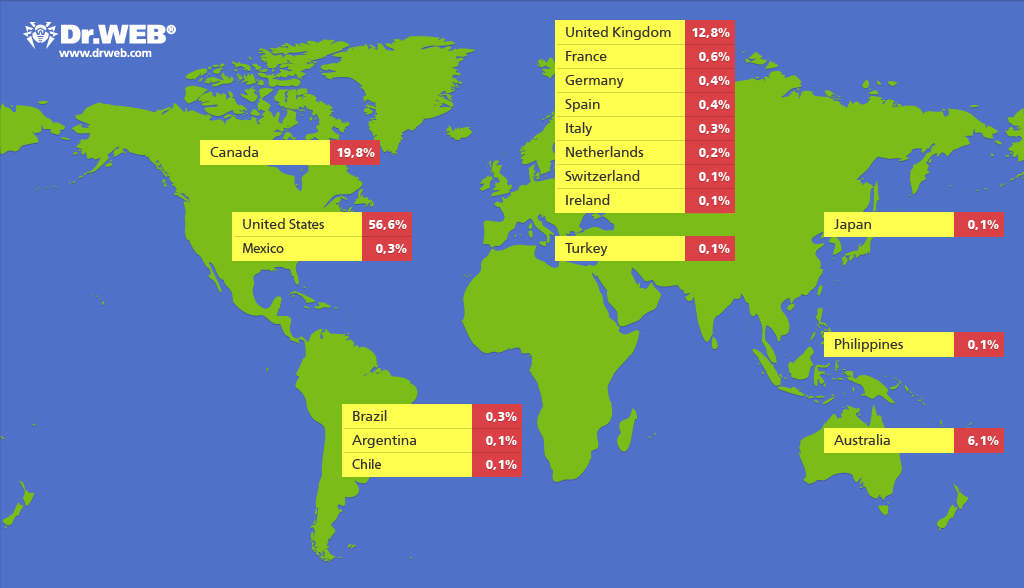
Russian Security Experts Analyze Backdoor.Flashback.39
Backdoor.Flashback.39, the piece of malware designed to target computers running Mac OS X, caused a lot of headaches for Mac users, especially because one of the Java vulnerabilities it exploited remained unpatched by Apple.
Security experts have found that even after Apple patched the flaw, the cybercriminals behind the operation didn't seem to be discouraged.
Researchers from Russian security firm Doctor Web analyzed the malicious element and determined that the infection begins when users are redirected to shady sites from compromised domains.
A piece of JavaScript code, placed on websites such as godofwar3.rr.nu, ironmanvideo.rr.nu, killaoftime.rr.nu, or gangstasparadise.rr.nu, loads the Java applet that contains the exploit.
The exploit then saves an executable onto the infected Mac machine. This executable file connects to a remote server from which it downloads and executes the final payload.
Continue Reading
Meet Zach And Ryan — They're Barely Legal Drinking Age And They're Teaching The World To Code
<iframe src="http://www.businessinsider.com/embed?id=4f7f083b6bb3f7281000005f&width=400&height=430" width="400" height="430" border="0" frameborder="0"></iframe>
Sunday, March 4, 2012
APPLE'S TV DREAM REVEALED: Embarrass Hardware Makers, Stiff Content Providers, Destroy Cable Companies
<iframe src="http://www.businessinsider.com/embed?id=4f50b02369bedd5d48000045&width=400&height=430" width="400" height="430" border="0" frameborder="0"></iframe>
FXI Technologies of Norway is sells one of the worlds smallest computers
FXI Technologies (www.fxitech.com) is a Norway-based hardware and software startup dedicated to making the world of digital screens smart and personal and computers smaller has released a new product called Cotton Candy. The Cotton Candy is a USB stick sized compute device allows users a single, secure point of access to all personal cloud services and apps through their favorite operating system, while delivering a consistent experience on any screen. The device will serve as a companion to smartphones, tablets, and notebook PC and Macs, as well add smart capabilities to existing displays, TVs, set top boxes and other media that supports USB mass storage.

Specifications
include an ARM® Cortex™-A9 (1GHz) CPU from Samsung, an ARM Mali™-400 MP (Quad-core, 1.2GHz) GPU, Wi-Fi and Bluetooth, HDMI output and the Android operating system. It decodes MPEG-4, H.264 and other video formats and display HD graphics on any HDMI equipped screen.
Features
• World’s smallest computer
• Serves as a companion to CE devices
• Displays personal content on any screen
• Interfaces with any USB/Bluetooth peripheral
• Connects to Internet via Wi-Fi
• User Upgradeable memory
• Great for gaming, video, photos, Cloud apps,
and more
Benefits
• Provide consumer-friendly access to the cloud
• Accelerate the adoption of “smart screens”
• Extend the life of consumer hardware like laptops,
monitors, TVs, STBs, tablets and more by accessing
the latest O/S, software and apps
• Enjoy a consistent experience across all screens
• Create a single point of content storage
• Consolidate and organize personal digital content
• Share media from mobile devices on large screens,
projectors, displays
• Drive down the cost of the secure personal computer
<object width="400" height="233"><param name="movie" value="http://www.youtube-nocookie.com/v/fgkejI0hbgo?version=3&hl=en_US&rel=0"></param><param name="allowFullScreen" value="true"></param><param name="allowscriptaccess" value="always"></param><embed src="http://www.youtube-nocookie.com/v/fgkejI0hbgo?version=3&hl=en_US&rel=0" type="application/x-shockwave-flash" width="400" height="233" allowscriptaccess="always" allowfullscreen="true"></embed></object>
Subscribe to:
Posts (Atom)


